Skip to content
Local 083 · Our higher education contract campaign

Strike notice given. Prepare together.

Our union’s notice identifies Monday, Sept. 28, 2026, at 6 a.m. as the intended strike start. Bargaining is scheduled for Sept. 24, with the goal of reaching an agreement that can avert a strike. [1]

Status source: our Sept. 18 notice report · Updated Sept. 19, 2026.

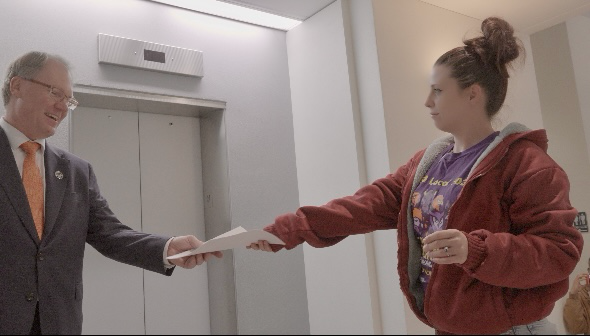
A Local 083 member hands our strike notice to OSU Provost Roy Haggerty in Kerr Administration Building.
Our Local 083 delegation delivered the strike notice at Kerr on Sept. 18. Read the notice and delivery report.

Preparing to strike

Counting down to strike

Intended start: . [1]

What comes next

Our timeline to strike.

Bargaining continues. An agreement can still avert a strike. [1]

  1. Completed

    Strike authorization vote

    97% of Higher Ed members who voted supported authorizing a strike. [7]

  2. We are here

    Strike notice delivered

    Our union delivered the notice to OSU leadership at Kerr. [1]

  3. Up next

    Back to bargaining

    Our team returns to negotiations to seek a fair agreement.

  4. Planned

    Intended strike start

    Prepare to stand together. Follow our union’s latest written instructions for any change.

Money and household support

Know what has been approved.

Financial support has different rules, applications and payment timing. These amounts are not a promise that every worker will receive every benefit.

$80 per day

Up to $400 per week in strike pay

Our Sept. 15 announcement covers workers who are striking and attend a picket line. Ask our organizer about registration, attendance requirements, approved accessible alternatives and payment timing. [2]

Strike pay is taxable income. A tax-form reporting threshold does not make the payment tax-free. [3]

Understand strike pay and taxes →

Up to $1,000

Initial hardship assistance

Our announcement says active strikers facing hardship may submit a bill for assistance, initially up to $1,000 and no more than missed pay. This is a separate application, not an automatic extra payment. [2]

Ask our executive team for the application process and what documents to provide privately.

Ask about hardship support →

Plan ahead

Unemployment, food and housing

Eligible striking workers may apply for Oregon unemployment benefits. Waiting requirements and weekly eligibility apply; payment is not automatic after two weeks. [4]

List essential bills and due dates. Contact local food, housing and utility programs before a missed payment becomes an emergency.

Find support in your county →

Questions from our members

Answers for the decisions ahead.

Our meeting raised practical questions about money, work and family responsibilities. Start here, then use the detailed guides or contact a steward about your situation.

Is strike pay taxed?

Yes. Budget for strike pay as taxable income. IRS Publication 525 includes union strike benefits in income. Receiving no tax form, or receiving less than a reporting threshold, does not make income tax-free. Keep payment records and ask for written tax information; do not assume hardship assistance has the same treatment in every case. [3]

Does the notice mean a strike is unavoidable?

No. Our notice states an intended start and a commitment to bargaining on Sept. 24. A settlement could avert a strike. Follow current written directions from our union for any change in the start time or return to work; an authorization vote alone does not tell you when to stop work. [1] [5]

Who is covered, and what if I cannot picket?

Confirm that your position belongs to our SEIU Higher Ed classified bargaining unit. Other workers at OSU may have different contracts and rules. Tell our organizer or a steward about disability, travel, shift or caregiving barriers and ask for an approved assignment. Financial eligibility for an alternative assignment needs confirmation; the published benefit announcement specifies picket attendance. [2] [5]

Read the Oregon strike-rights guide.

Will my insurance continue, and can I use paid leave?

Get written confirmation for your appointment before relying on a coverage date or changing scheduled care. Ask OSU Benefits about coverage, employer contributions, your premium share and continuation options. Ask a steward about planned leave and strike participation. Do not treat a meeting example as a guarantee for every worker. [6]

Work through the pay, leave and coverage checklist.

Where do I report, and how do I record my time?

Use the written picket schedule and check-in instructions issued by our strike leadership. Proposed locations and volunteer ideas discussed at a meeting are not a complete schedule. For work time and strike absences, obtain written OSU Payroll instructions for your employee group and timekeeping system, and keep an accurate personal record.

Ask before alternating between work and strike days, accepting an alternate assignment or changing an approved leave plan. Contact our stewards.

What are we bargaining for?

The notice identifies unresolved issues involving wages and cost-of-living adjustments, insurance, contracting out, layoffs, trial service and contract duration. Our goal is a contract members can approve that supports the people who keep our universities running. Read dated bargaining updates for specific proposals; an earlier offer is not necessarily the current one. [1]

Follow our bargaining updates.
Go deeper

A guide for each part of your plan.

Your readiness checklist

Save contacts, prepare household records, plan for unpaid time and ask about participation barriers.

Prepare your household →

Oregon rights and protections

Understand the legal process, protected activity, management questions and when to ask for representation.

Know your rights →

Pay, taxes and benefits

Separate strike pay, hardship assistance, unemployment, health coverage and possible back pay.

Make a financial plan →

Food, housing and utilities

Find Corvallis-area resources and community action contacts for all 36 Oregon counties.

Find help near you →

Why workers strike

Consider collective bargaining power, the costs of a strike and honest questions from coworkers.

Understand the decision →

Our labor history

Read a sourced timeline of U.S. and Oregon organizing, including victories and difficult outcomes.

Explore strike history →

Sources and review

Where these answers come from.

Source check: Sept. 19, 2026. Our meeting notes inform the questions; published notices, agency guidance and law support the factual answers.

  1. Local 083, Sept. 18 strike-notice report and reproduced notice — intended start, next scheduled bargaining and unresolved issues.
  2. Local 083, Sept. 15 strike-benefits update — reports the Sept. 13 approval, strike-pay limits and hardship conditions for Higher Education.
  3. IRS Publication 525, Strike and lockout benefits — union strike benefits are included in income; narrow gift treatment depends on the facts.
  4. Oregon Employment Department, Unemployment benefits for striking workers — waiting requirements, weekly eligibility and back-pay consequences.
  5. Oregon Employment Relations Board, Public Employee Collective Bargaining Act — Oregon public-sector bargaining and strike process.
  6. OSU Employee Benefits contacts and Oregon Public Employees’ Benefit Board — appointment-specific coverage questions and plan information.
  7. SEIU Local 503, Sept. 17 strike authorization result — 97 percent of voting Higher Ed members authorized a strike; this is not a turnout figure or an OSU-only result.